Best Sahara Tours from Marrakech, From Stone Desert to Golden Dunes
Most people picture the Sahara as empty. It is anything but. This is one of the most extreme living ecosystems on the planet, and it is quietly full of life, from fennec foxes and jerboas to dromedary camels, larks, and the remarkable creatures that have adapted to survive where almost nothing should. Add the palm oases teeming with birds, the star-drenched skies, and the sheer scale of the dunes, and the desert becomes one of the richest places you can travel to.
From Marrakech, the Sahara is within reach, and the single biggest decision is how deep you want to go. Morocco has a few very different desert regions, and how far you drive determines how wild it gets. A short hop gets you a taste. A few days gets you the real thing.
There is a catch worth knowing. The iconic golden dunes you have seen in photos are a long way from the city, roughly nine to ten hours of driving, so a genuine Sahara trip means committing at least three days. Anyone promising the big dunes in a single day is selling you a rocky substitute.
A few things separate a good tour from a rough one. Choose an operator who treats the camels and the nomad communities with respect, because animal welfare and cultural care matter here. Check what is included, transport, camp, meals, and the camel trek. And match the trip length to the destination, because the desert punishes a rushed itinerary. Here are the best ways to experience it, ranked from the closest and gentlest to the wildest and most remote.
1. Compare and Book It All in One Place
There are day trips, two-day runs, three-day classics, and remote expeditions, across several desert regions and a huge range of operators. Sorting that from home, and telling a genuine dune experience from a marketing photo, is genuinely hard. Marrakech Desert Tours is a platform built around exactly this, so instead of guessing you get the options laid out clearly by region, length, and what each actually involves.
The value is that it steers you around the classic mistakes, like booking a one-day trip expecting Lawrence of Arabia dunes. You can weigh a quick Agafay evening against the full Merzouga journey, see what is included, and pick an operator who runs things responsibly.
You can compare Marrakech desert tours here and choose the right route before you go, which matters given how far apart these deserts are.
Best for anyone who wants the right trip without the research spiral. If you already know your route, book it directly.
2. The Quick Escape: The Agafay Stone Desert
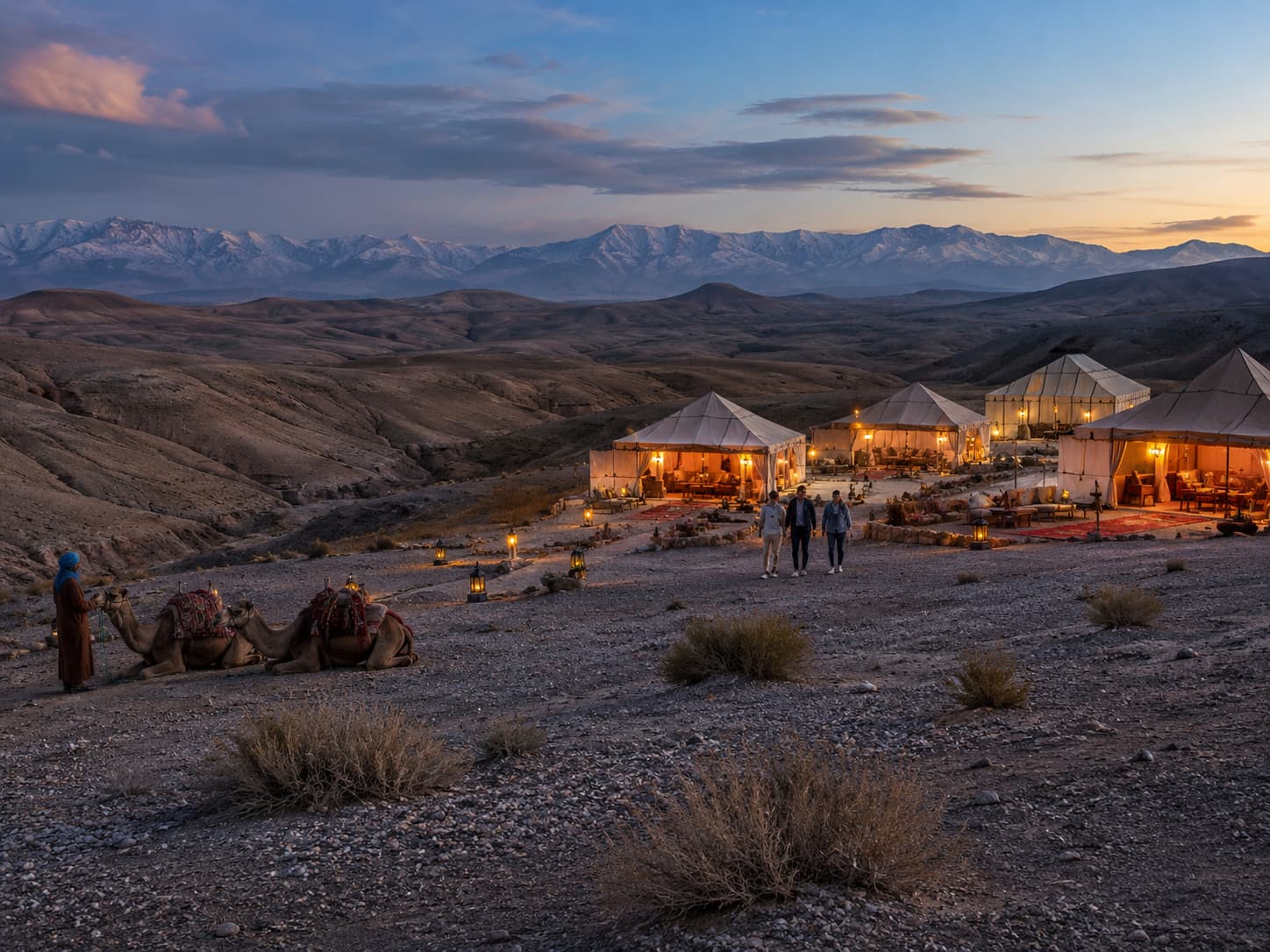
Short on time? Agafay is your friend. This rocky, moon-like desert sits just 40 kilometers from Marrakech, about an hour away, with sweeping High Atlas views and a growing collection of stylish camps. You can do it as an evening trip or an overnight, with camel rides, quad biking, dinner under the stars, and some of the clearest night skies you will find so close to a city.
One honest caveat: Agafay has no sand dunes. It is stone and scrub, dramatic in its own stark way, but not the rolling Sahara of your imagination. Come for the atmosphere, the sunset, and the stargazing, not the dunes.
Best for travelers on a tight schedule who want a magical desert night near the city. Not the pick if golden dunes are the whole point.
3. The Two-Day Taste: Zagora and the Draa Valley
If you have two days and want a real overnight in the Sahara, Zagora is the quickest way there. The drive, around five to six hours, follows the Draa Valley, a ribbon of green palm oasis threading through the arid land, alive with birds and old kasbahs. You reach a desert camp for a camel ride, dinner, and a night under the stars.
The dunes here are modest, closer to ten meters than a hundred, so this is more a taste than the full spectacle. But the Draa oases are a genuine highlight for anyone who loves seeing how life clusters around water in a harsh land, and it is the most budget-friendly overnight option.
Best for weekend travelers, tighter budgets, and those who value the oasis landscape over towering dunes.
4. The Three-Day Classic: Merzouga and Erg Chebbi
This is the one most people picture, and the one worth the drive. Merzouga is home to the Erg Chebbi dunes, an ocean of orange sand rising up to 150 meters, glowing at sunrise and sunset. The three-day route is a journey in itself, crossing the Tizi n’Tichka pass through the Atlas Mountains, stopping at the UNESCO kasbah of Ait Ben Haddou, and winding through the Todra Gorge and Dades Valley before the sand takes over.
You ride a camel into the dunes for a night at a desert camp, with Berber drumming, a hearty dinner, and a sky so thick with stars it hardly looks real. Out here the desert reveals its life, from the tracks of nocturnal creatures at dawn to the fennec foxes that emerge in the cool of night. Climbing a dune for the Sahara sunrise is the moment people remember for years.
The long drive is the trade-off, and the camp is basic by design. Come for the landscape and the wildlife, not luxury.
Best for anyone who wants the definitive Sahara and can spare three days.
5. The Wildest Route: Erg Chigaga by 4×4
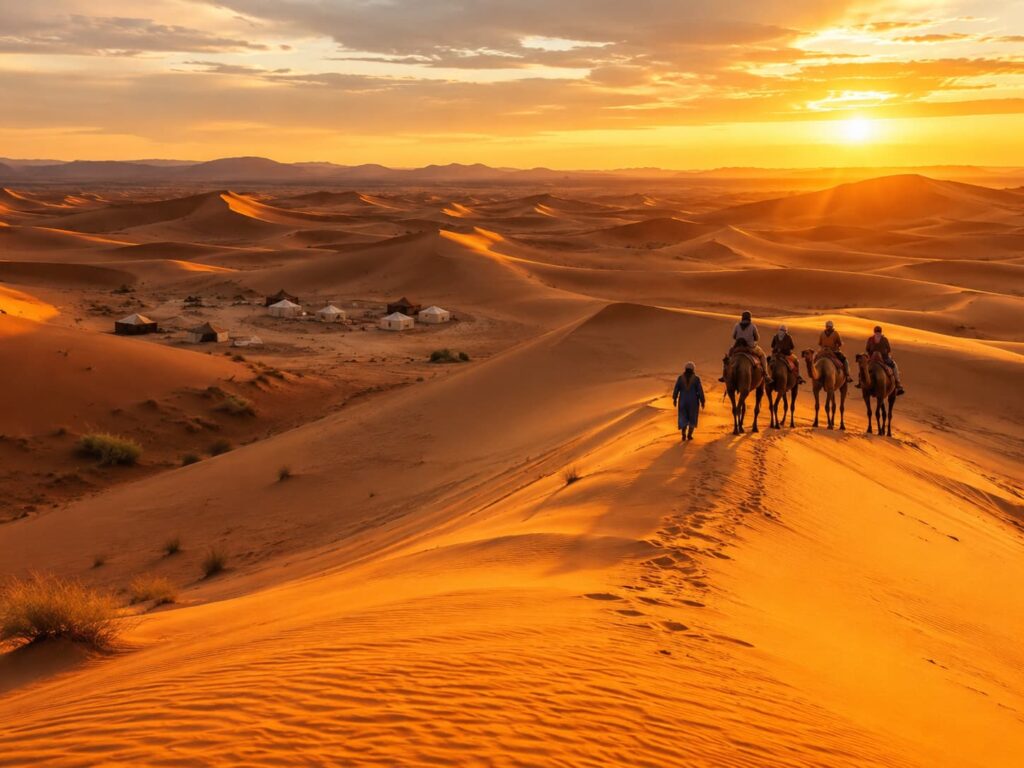
For the true wilderness version, Erg Chigaga is the deep end. These are the remotest, most dramatic dunes in the accessible Moroccan Sahara, reached by 4×4 over rough tracks on a four-day or longer expedition. There are no crowds, no easy road, just vast, untouched sand and profound silence.
This is the naturalist’s and adventurer’s choice, the one where the desert feels genuinely wild and the solitude is total. The night skies are the darkest of all, and the sense of being far from anything is the whole reward.
It takes more time, more driving, and more comfort with rough conditions. Not for a casual first visit, but unmatched if you want the real, remote Sahara.
Best for adventurous travelers chasing solitude and the wildest scenery.
A Few Practical Things Before You Go
Time it right. Spring, March to May, and autumn, September to November, are ideal, with warm days and mild nights. Avoid high summer, when daytime heat pushes past 45 degrees, and pack warm layers year-round, because desert nights get genuinely cold, even freezing in winter.
Respect the environment and the people who live in it. The desert is a fragile extreme environment where survival is hard-won, so take your litter out, keep your distance from wildlife, never feed the animals, and choose operators who look after their camels and work fairly with local nomad communities.
Pack a scarf for sun and dust, sunglasses, closed shoes, sunscreen, and that warm layer for the night. And accept that the drives are long; on the Merzouga route, the journey through the Atlas and the valleys is half the experience.
For planning, the official Visit Morocco site is a clean starting point, and UNESCO’s page on Ait Ben Haddou is worth a read before you pass through it. Both pair well with any related nature or travel guides already on the site.
Choosing the Right One for You
The Sahara rewards travelers who match the trip to their time and how wild they want it.
Start by comparing your options through Marrakech Desert Tours so you pick the right region and a responsible operator. Short on time, do an Agafay evening. Have two days and a budget, head to Zagora and the Draa oases. Want the iconic dunes and can spare three days, go to Merzouga. Chasing true wilderness, take the 4×4 route to Erg Chigaga.
However you go, remember you are stepping into a living ecosystem, not an empty one. Watch for the tracks at dawn, listen to the silence, and look up at night. The desert has far more life in it than it lets on.
Author note: recommendations here are based on Morocco’s established desert routes and reputable operators. Prices, conditions, and seasons change, so confirm the current details and choose responsible operators before you book.